Hellebores are one of the finest, sweetest, most heavenly of the flowering winter plants. En masse, they are truly magical. When naturalised, throwing their seeds across ever expanding areas, they create a rich intricate tapestry, an exquisitely studded, sparkling and bejeweled woven oriental carpet. And yet again I can guarantee, you can never have enough of them in any garden, both big and small.
I write this in mid-February. The reason is, I am cleaning out an old established garden, overpopulated with hellebores and relocating them to another large rural garden I am designing. This new location is perfect for creating, in time, another sweeping naturalising hellebore flowering extravaganza.
It is in the dead of winter when Hellebores create their magical flowers. Accordingly, it is when they are commercially available in nurseries or online. Due to the ease of modern hybridisation, today the choice is freakishly expansive. This is the optimum time to begin or tbo continue your Hellebore collection. The season of their availability is brief and short, especially when in flower, so don’t delay, get them while you can.
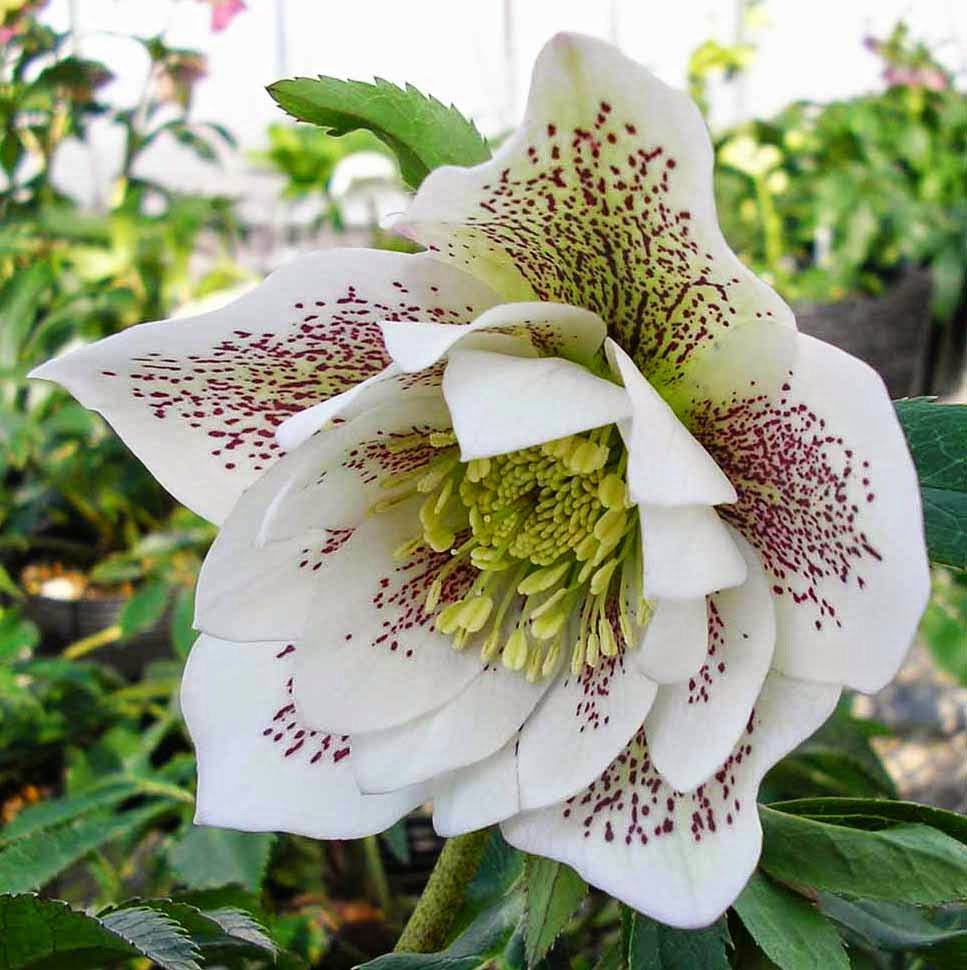
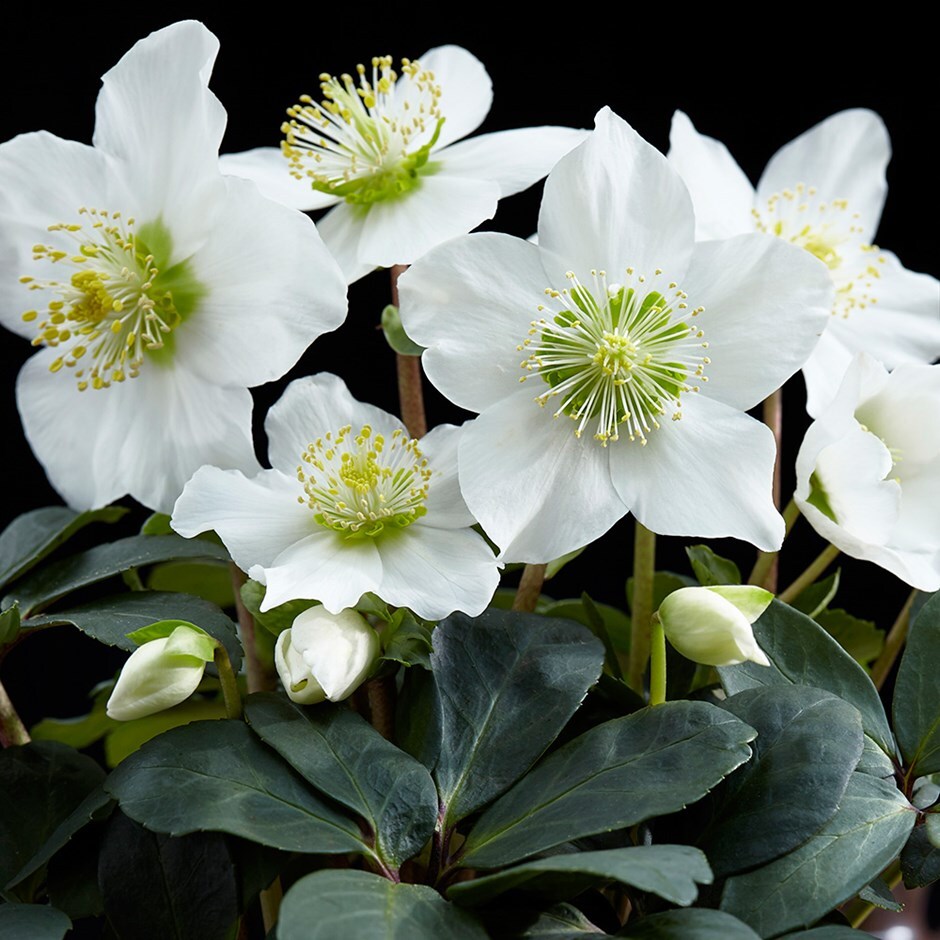
The Hellebore’s flowers are shaped like bowl, with a palette of flower colours ranging from pure white, ivory, cream and pale yellow and lime green, through to shades of the softest pastel pink, rich crimson and royal purple, true chocolate and even slate/black. The flower petals can be displayed in singles, doubles, even multi-petals. Just to ramp up their real beauty, the petals are often exquisitely detailed with delicately spotted or freckled marks. Their tough, leathery, glossy green leaves are endearing in their own right, a great bonus in any garden.

History
Hellebores belong to the Ranunculaceae family which include delphiniums, anenomes and aquilegias.
In the northern hemisphere, having opposing seasons to us, they are known as the Xmas or Lenten rose, its flower the symbol for Christmas Day. Here they are aptly called the winter rose.
In my research, one source says the name Hellebore seems to derive from the Greek ‘helloboros’ which means eaten by fawns. This is all very questionable and all a whole lot of silly because all parts of the plant are highly poisonous. The roots especially are so poisonous that in past times, when powdered and mixed with other feed, it was used to kill rats and mice.
A second source, again from Greek language states, a ‘hellion’, means to kill, and ‘bora’, food. That is, food that kills. Bye bye vermin.
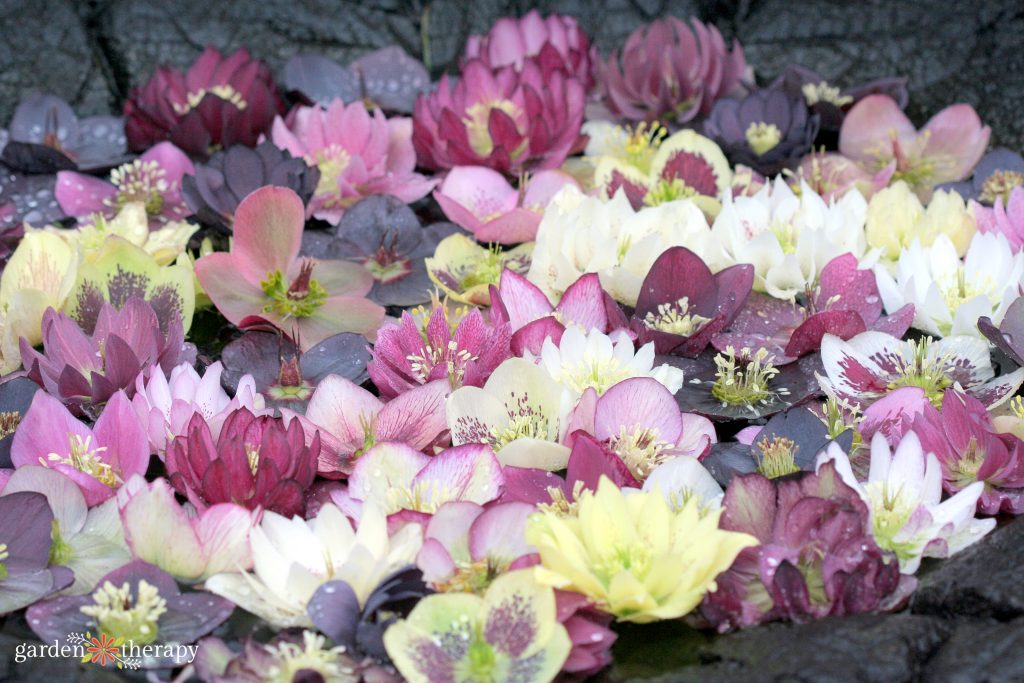
If Hellebores have a drawback, if only slight, is that the flowers tend to nod and hang down on very short stems. So, if you are not an ant or millipede, or not too inclined or eager to lay prostrate on your belly or back, the ground and attempt to look skywards, you miss the full beauty of their inner petals. For me the best way to showcase and appreciate them is to float them in a bowl of water, broad and relatively shallow, glass is best if you have one. They will decorate a table and survive splendidly for a good week or more

Cultivation
Hellebores possess the magical habit of prolifically self-seeding. In time they can create great, long, deep sweeps. The best examples of successful hellebore planting are when they are nestled and naturalised under the broad protective canopies of large deciduous trees. When the overhead trees are bare of foliage, the position perfectly provides the ideal site of full warming winter sun, and in turn when the trees are in full leaf provides the relief from harsh summer sun. When established hellebores are very drought tolerant. If the heat is extreme, their foliage may well disappear in summer, but will magically re-emerge in the coming autumn with the advent of cooler conditions.
Hellebores are very low maintenance. Once a year In late autumn/early winter, or that is, when I get around to it, I cut back to ground level the one year old, tattered, dry leaves. This then better reveals their emerging floral display. The only soil prep I undertake is a generous annual dressing of Seamungus for the improvement, followed by a loose scattering of chicken fertiliser. Nature has already provided a rich, thick decomposing fallen leaf litter mulch supplied from the autumn deciduous trees above.
Landscaping
However if you are restricted in space, like my own garden, don’t despair, a simple planting of three or more plants together or even scattered individually, are enough to reward you with their beauty.
Myself my areas are not sufficient in size to execute a large broad carpet of them, soI have about two dozen or so scattered strategically around my own garden. The plantings are all neatly nestled on the east and north at the feet of shrubs and trees, in order to provide the essential protection from hot summer sun.
Propagation
As the Hellebore flowers fade, at their centre seed pods will emerge. Collect the seed when it is ripe and rattling merrily inside the pod. Hellebore seeds must not be stored, the seeds lose their viability if it is not sown fresh. Fill a seed tray with a cutting and seedling potting mix and sow straight away and leave the tray in a sheltered shady spot. As they grow prick out and pot on individually. The great joy of sowing hellebores is anticipating what flowers your seedlings will produce when they flower for the first time. They will have hybridised so the seedlings could well be completely different to the parent and you may even discover your own gems among the new plants.
If you are a bit of an adventurist, want to have some real good fun, and learn new gardening skills, you can try yourself to create hybrid crosses when the Hellebores begin to flower. Choose a ‘mother’ for its flower shape and healthy growth and a ‘father’ with flower colour or patterns you particularly like. Use a small paint brush to move pollen from the father to the centre of a young ‘virgin’ mother flower just as it opens. Remember to tie something behind the flower so you know which seed pod to collect seed from. Who knows you may successfully discover a brand-new hybrid. Then you can patent it, name it after yourself or your one true love, become immortalised, sell it worldwide, showered with zillions of dollars and retire early.
Good luck, happy gardening and most importantly have a lot of fun.
Regards Ned McDowell