The Flaming Rich Blood Red of Flanders Poppies

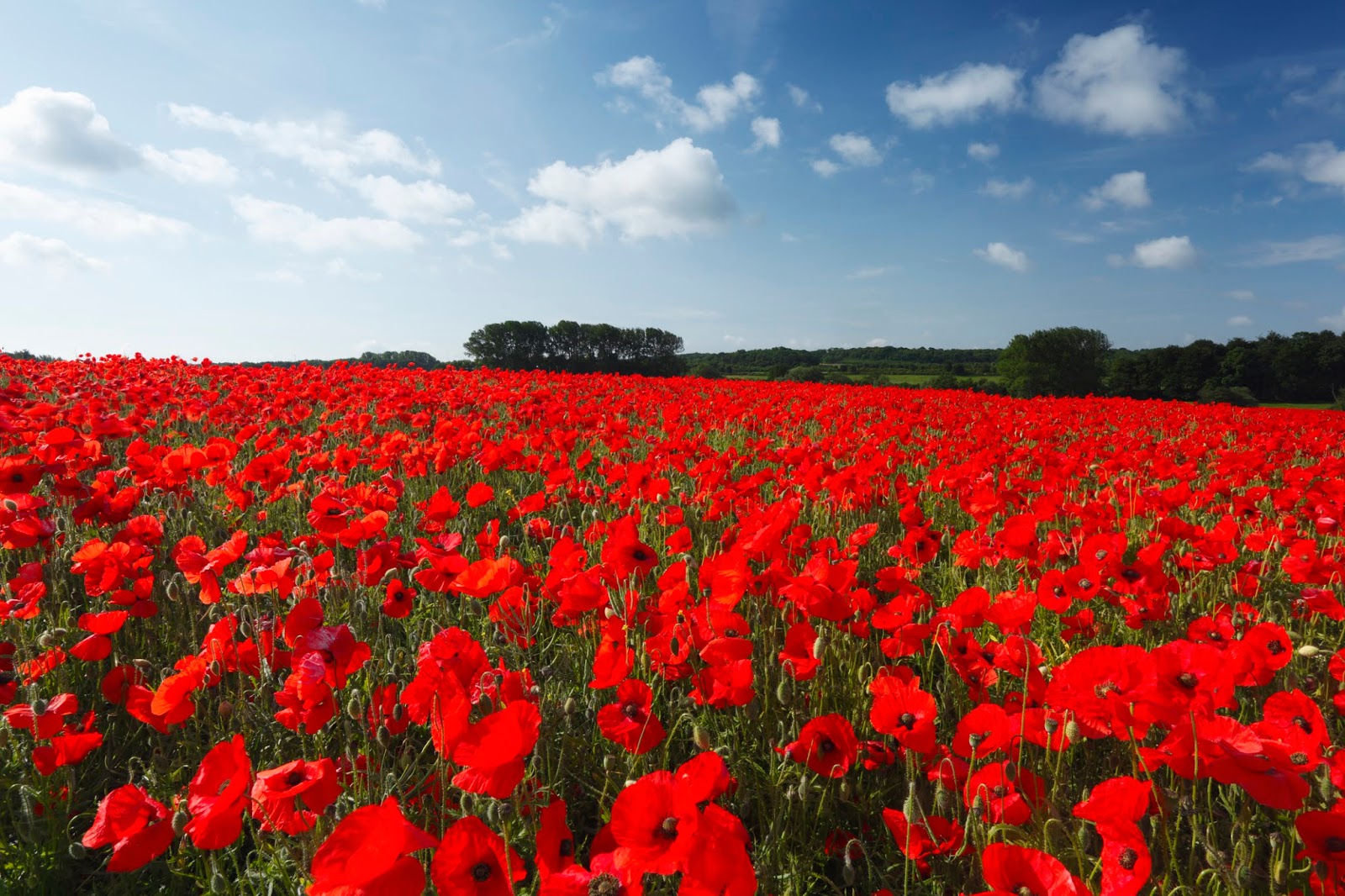
A few months ago, I had a customer who showed me a long line of photos on her mobile phone. The photos subject was exclusively of an extended massed planting of Flanders red poppies. She was so impressed by the show she wished to replicate it. Upon asking her where this garden is, she gave the approximate address. Instantly I knew where it was. It was in fact my very own garden. Filled with pride I explained to the lady that I was the actual owner. The following day I offered the lady an envelope of a thousand or so seeds. Happy as can be, she merrily skipped off with total glee to spread the success of poppies further afield.

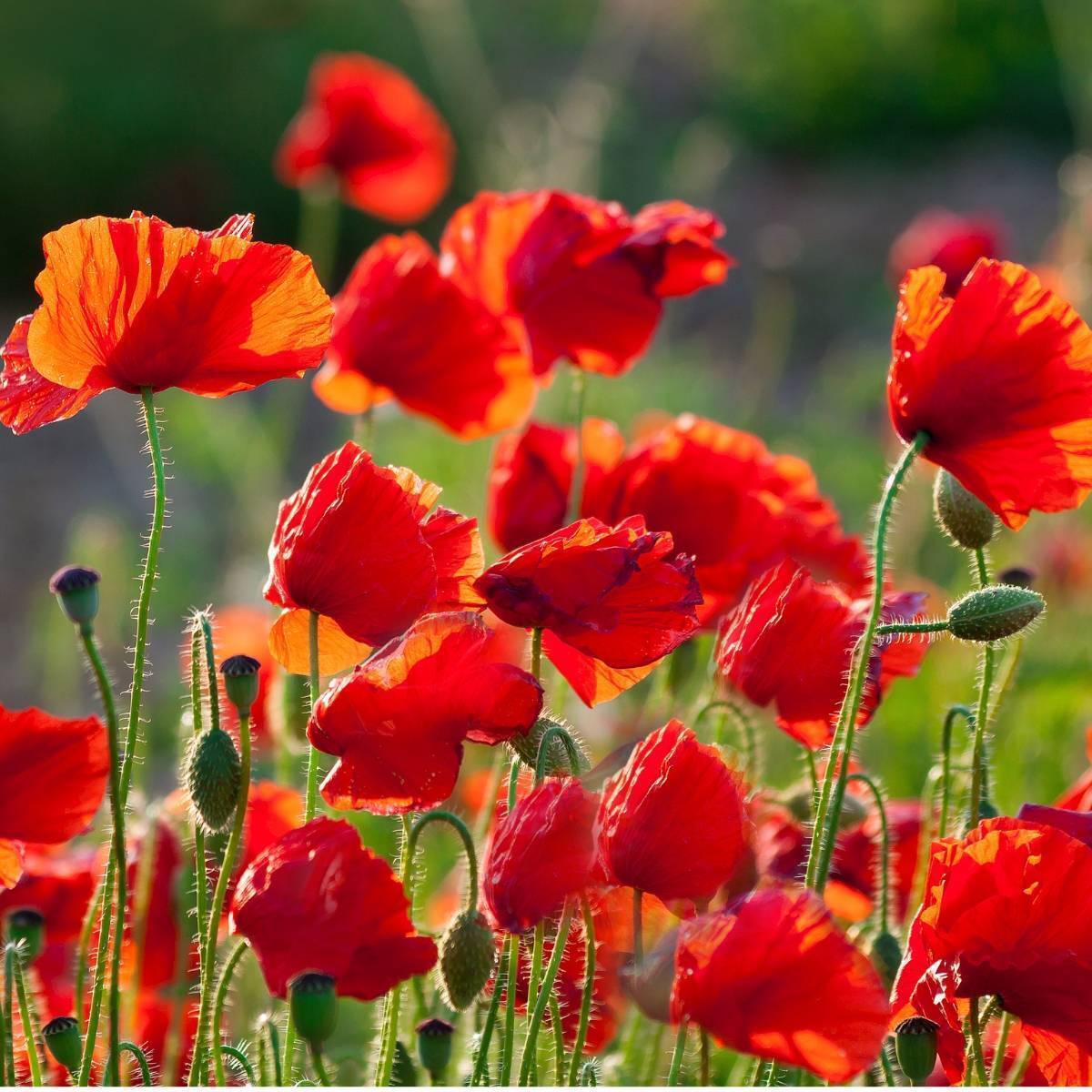
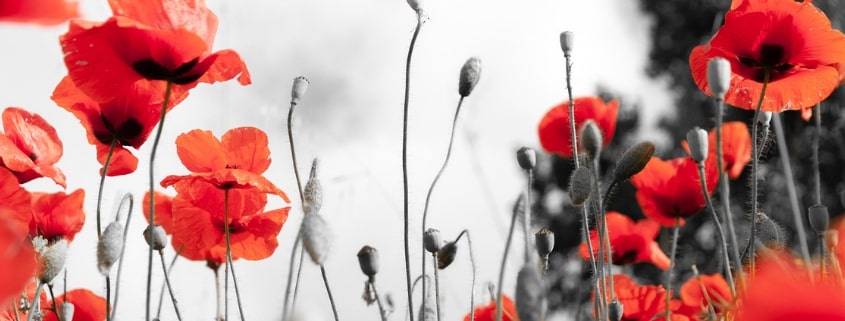
In spring my grand red poppy spectacle runs the entire length of my front garden which borders a major road. When in full bloom the hundreds of poppies create a long, crazy, riotous streak of a flaming rich blood red, a blaze of fire and a vampire’s idea of pure heaven. The flower’s petals, though tissue thin, possess a luxuriant glossy sheen and there are very few other red flowers as sincere and true in their red colouring to match them. Then just to create that little bit of more beauty are the contrasting ink black centre of the flower. Personally, as a garden design it is an unforgettable statement.
History:
We all recognise the flower emblem and the significance of the red poppy. It began with the unforgettable hellish and horrific trench warfare in Flanders, France in the First World War. These trenches were surrounded with the naturalised flaming red poppies. The well-known poem begins “In Flanders’ fields the poppies blow,” and ends with the lines “if ye break faith with us who die / We shall not sleep, though poppies grow / in Flanders’ fields”. Today the red poppy has become a universal symbol for the remembrance of the fallen soldiers who sadly lost their lives in the service of their country.

Cultivation
The wonderful thing about this annual planting of poppies is that is completely free and achieved with the minimum of effort. Every late spring, when the petals have fallen and the pods have ripened to just dry, I collect their seeds.

Half of the crop are picked to be stored in airtight jars as gifts for friends and the other half are whimsically strewn across the long bed by shaking and rattling the seed pods in preparation for the following year of the self-seeding poppies. I also cover the soil with generous carpets of Seamungus and Rooster Booster to continually replenish and improve the quality of the soil.
Landscaping:
This year I have a new design plan. I believe it will be just as easy and carefree, just as reliable in their massed appeal and still as cheap as chips. As the poppies are finished for the season, I will immediately be planting the seeds of nasturtiums, to create another long blaze of fiery colours to shine right throughout the long hot summer months. Every year in late autumn, these seeds in turn will become dormant, the frosted back foliage will provide a mulch to further enrich the soil, and then, in turn, they will be replaced by another bountiful cycle of the red Flanders poppies. I hope it all works out.

As an aside, the height of the poppies are a good one metre high and thankfully disguise what has been lazily ignored behind them, such as my sculptured santolina hedge and the bank of the my double hedge of roses.

Happy gardening, good luck and have fun,
Ned McDowell
The Ups and Downs of growing Ranunculi


Ranunculi are undoubtedly one of the greatest of the spring bulbs.

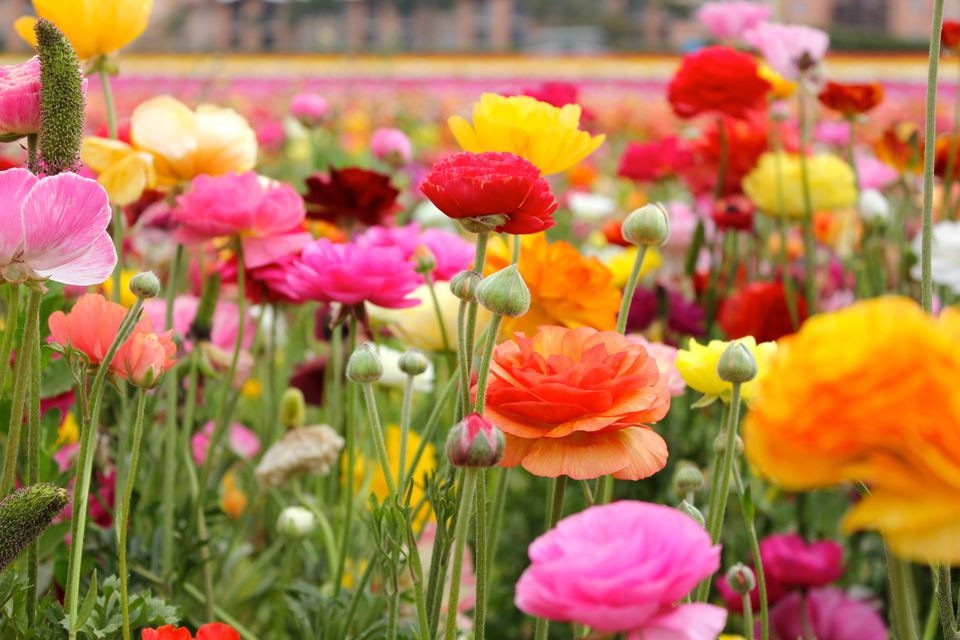
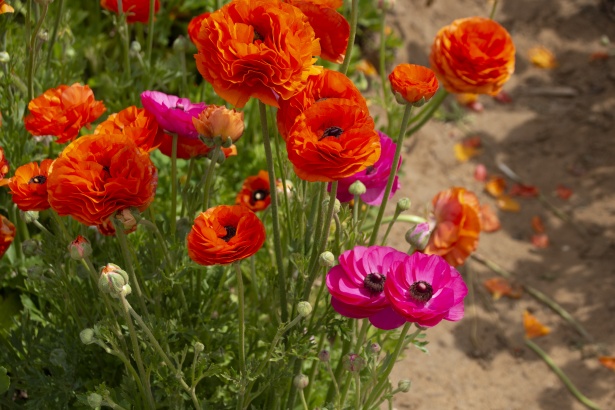
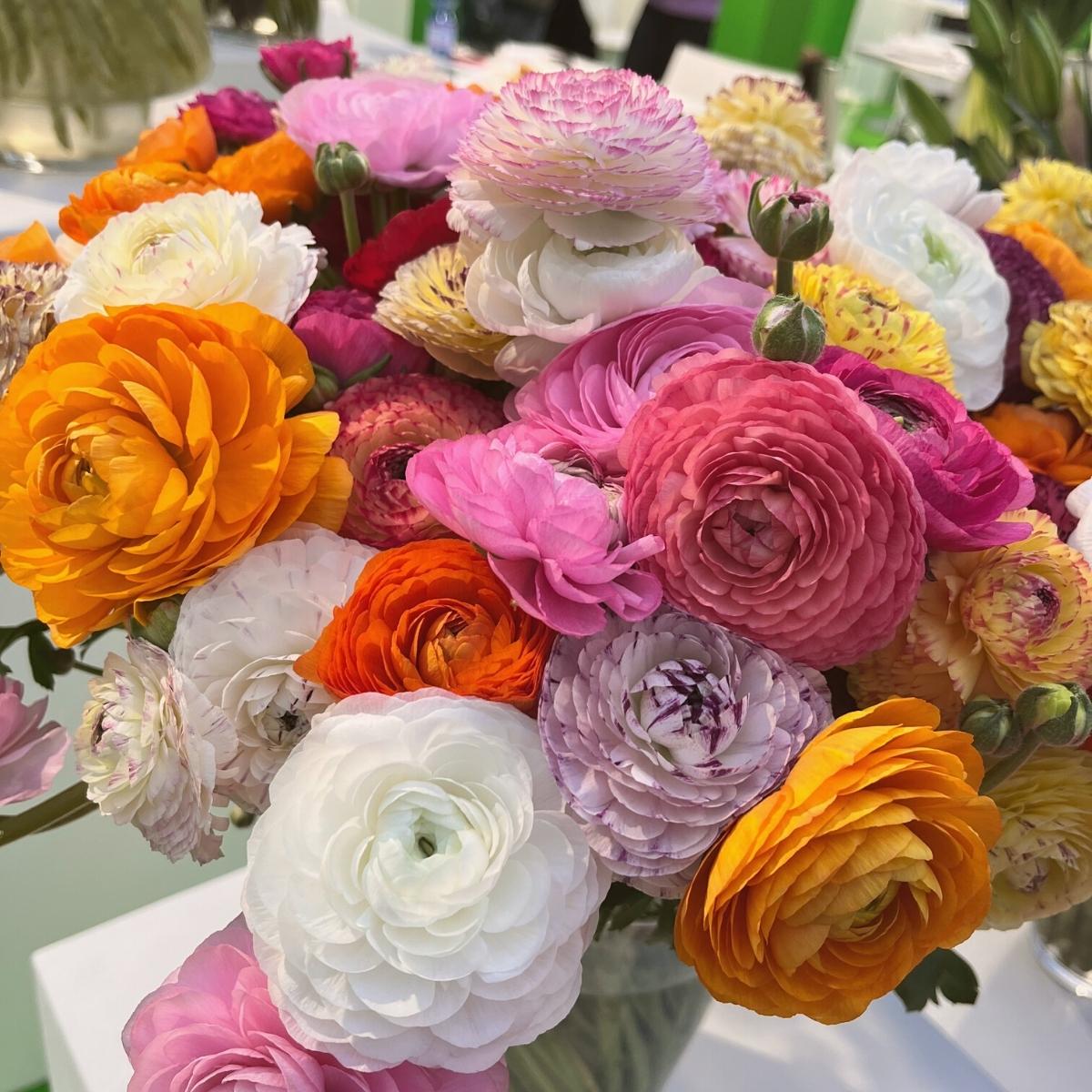
They are the happiest of flowers, full of fun and merriment. They provide a very welcome splash of the most honest, brightest and richest of flower colours. Thus if you seek a visually dynamite, stellar and sizzling spring statement, there is no better corm/bulb to plant to celebrate the end of winter. They are a must have for every garden, both large and small.

Regrettably often they are overlooked, even eclipsed, when displayed in packets for sale, jostling for space and attention with the vastly more popular tulips and daffodils.

Every year in late autumn/winter, like seasonal clockwork, I plant a drift or three of new ranunculi.

But this autumn I have grander plans. I want to create a long magical riot of ranunculi, providing a kaleidoscope of vivid colours, pink, orange, white and burgundy. I have just planted over 360 corms. They are not expensive, about $13.00 a pack. My plan is they will perfectly accompany my 10m long drift of self-sown red Flanders poppies intermingled with the odd pink opium poppy.

This image has an empty alt attribute; its file name is ranunculus-flower.jpg

History

The name ranunculus derives from the Latin word ‘rana’, meaning frog. The plant was so-named since the original ranunculus frequently grew in marshy places inhabited by frogs. However Ranunculus asiaticus (orientalis), is the form commercially available today. They are native to the mountainous regions of South Eastern Europe, Greece and Asia Minor, all generally cool and dry in climate

I vividly remember the first time I ever planted Ranunculus. I was an innocent, naive, yet confident strapping young fellow of eighteen. I was employed to plant a thousand or more of them. The garden is an old, grand and expansive country garden. Provided only with the briefest of instructions from the garden owner of where to plant them, she immediately exited to pursue evidently more urgent and glamorous pursuits. Left alone with no previous experience of planting ranunculus, I was immediately riddled with indecision. Why?  It was the dilemma of which way was side up or side down of the corm/claw. After a very long period of procrastination and getting nowhere, something had to happen. Action was required. It was 50/50 gamble, a toss of the coin, heads or tails, claws up or claws down. A determined decision was reached and I proceeded to plant them all. Long weeks passed, nothing happened, not a single leaf emerged anywhere, let alone a flower. Alas I had lost the gamble. I had planted them the wrong way up/down. Woe was me. I faintly recall I may have unconvincedly mumbled to the owner the corms were poor quality. Thankfully I didn’t lose my job in this beautiful garden, and continued work there one day a week for the best of ten years.

The plant is highly poisonous, like nearly all garden plants. Yet to date, I have never heard of a death due to the consumption of ranunculus.

Cultivation

To be very clear you plant the corm/claw downwards. Way back when, as you well know, I learnt this fact the hard way. Plant them in relatively friable soil or in pots with a quality potting mix. Ensure they receive a good, generous amount of winter/spring sun to guarantee germination and optimum flowering and bingo you have a magical floral masterpiece.

Through experience I treat them as annuals. The corms are so small and when dormant, you seem to lose them throughout the year because of digging and weeding in their area. Happily a few will magically naturalise and reappear the next year, but alas not very many.  Thus I replant them each year and hopefully so will you.

Good luck and happy plantings,

Ned McDowell